


Linear light can emphasise a table’s length, a circulation route or the geometry of a ceiling. Yet similar slim bodies may contain different optics, fixing arrangements and controls. Nova Luce’s linear solutions provide useful examples of what to compare before choosing.
Compare mounting approaches in Luminance’s surface-mounted and pendant lighting categories. This overview looks at the manufacturer’s solutions and practical decisions for a lighting project.
1. Give the line a clear job
Start with furniture and circulation plans. Above a long table, the relationship to the work surface matters; in a corridor, consider the route; in a shop, decide what a visitor should notice first. Do not choose body length solely from the available ceiling space.
Mark the areas needing ambient light and those needing directed illumination. A meeting room and display area have different needs even when their dimensions match. The fitting’s shape supports the composition but does not determine the lighting result on its own.
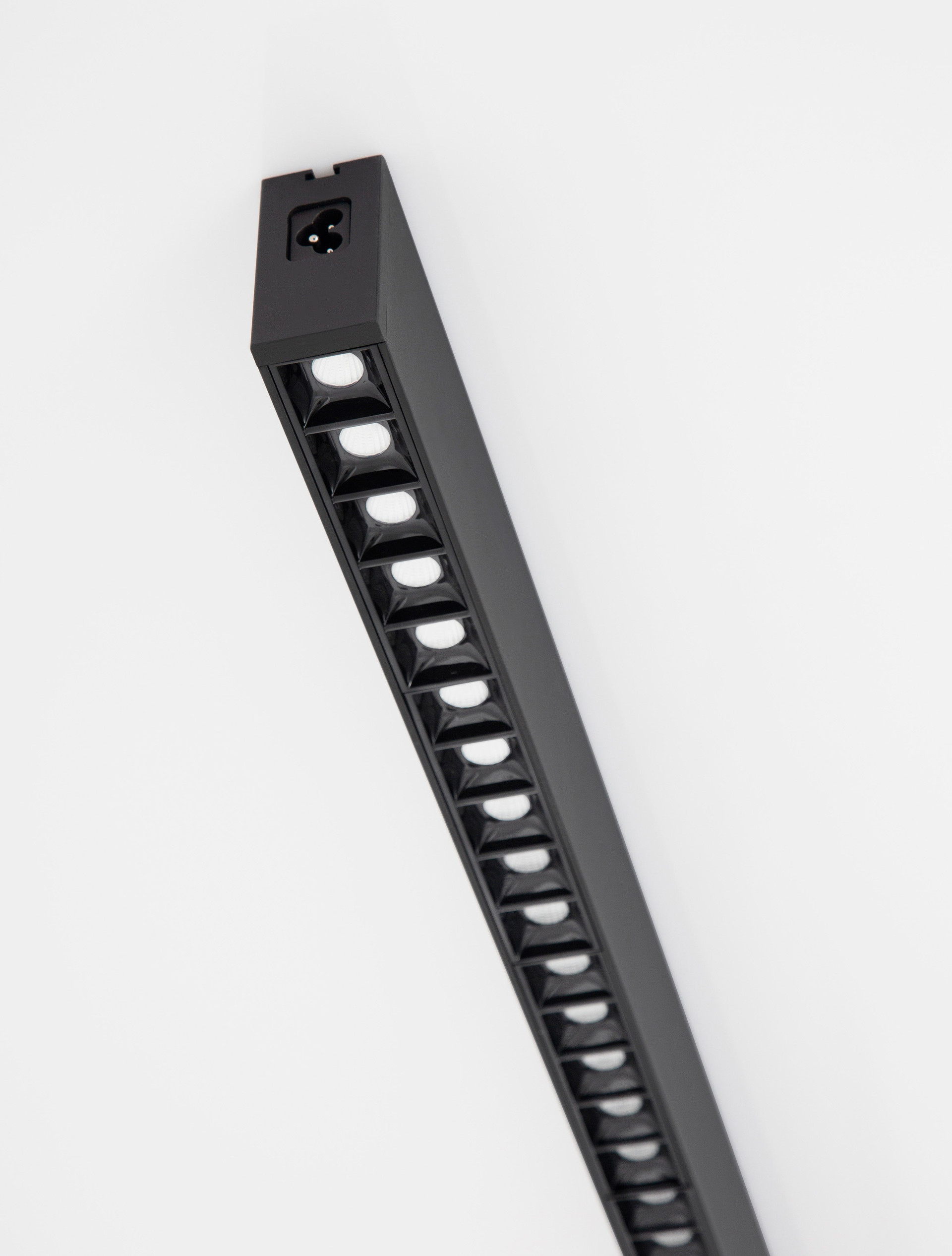
2. Lina: a surface-mounted example
Nova Luce lists Lina 9080140 as surface-mounted, 120.7 cm long, 40 W, 4000K, 2800 lm and a 30° beam. This version is not dimmable. Source: the manufacturer’s product page.
The example shows why the exact reference matters. A long body does not automatically mean broad distribution. When selecting a surface-mounted light, relate its optics to the width of the target area and ceiling height.
3. Smart Lina: suspension and different controls
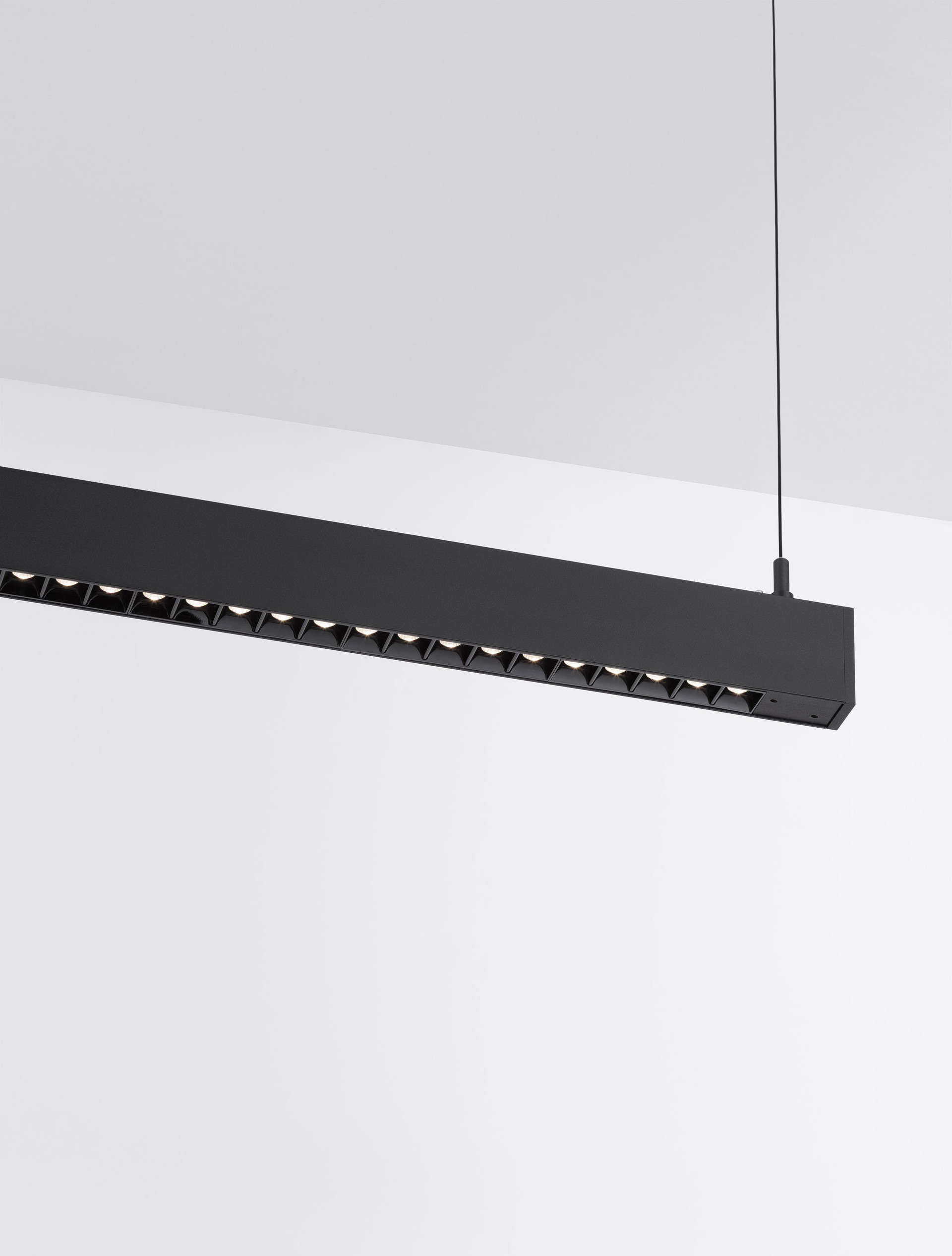
Smart Lina 9063611 is a 152 cm pendant: 25 W, 3000K, 1625 lm, a 30° beam and IP20. The manufacturer specifies Motion Sensor dimming. Source: the official product page.
A control feature does not establish compatibility with every wall dimmer or smart home system. Check the operating method in the instructions. For pendants, also consider installation height, fixing points and the power outlet position.
4. Homes, offices and commercial interiors
At home, a linear pendant can form part of a composition above a table or kitchen island. Establish furniture dimensions, seating positions and main sightlines first. Check that the body does not obstruct views or put bright optics directly in front of the eyes.
In an office, coordinate fittings with desks and screens. In commercial interiors, plan circulation, merchandise and the checkout area separately. A project with defined performance requirements needs a lighting calculation; an interior photograph and wattage cannot replace it.
5. Compare these points before ordering
Choose the mounting approach first, followed by optics and control. Compare the selected version’s length, output, colour temperature and intended environment. Matching body colours or family names do not guarantee matching specifications.
Do not assume individual linear fittings can be joined into a continuous system. Check connectors, supply arrangements, suspension parts and assembly limits in the documentation. Prepare a component list and agree installation details before finishing work begins.
- Furniture, circulation and power outlets.
- Mounting method and dimensions of the exact reference.
- Optics and output for the task.
- Control method and component compatibility.
- Maintenance access and an agreed component list.
Choose lighting around your project
Explore the Luminance catalogue and tell us about the room dimensions and lighting tasks. This helps narrow the selection to suitable solutions.
Explore pendant lighting