


A beautiful pendant connects lighting with the interior, but above a table it also has a job to do: illuminate the surface, allow conversation and avoid glare. Start with the dimensions of the furniture and how you use the space, rather than a photograph of the light alone.
Compare shapes and options in the Luminance pendant lighting category. The following sequence makes the choice more deliberate: purpose, proportions, height, light distribution and controls.
1. Start with the table or island
Measure the length and width of the worktop, its height above the floor and the distance to the ceiling. Mark seating positions, preparation areas and the main viewing directions. A pendant usually relates to the furniture below it, not automatically to the geometric centre of the room.
A dining table is a place for conversation and relaxed evenings. A kitchen island may be a preparation surface, breakfast bar or both. If food is prepared there, decorative lighting should not leave a shadow exactly where ingredients are being chopped.
2. One large pendant or several smaller lights?
For a round table, one central pendant is often a useful starting point to test. Above a long table or island, consider a linear fitting or a row of pendants. These are composition options, not a rule that every island needs three shades.
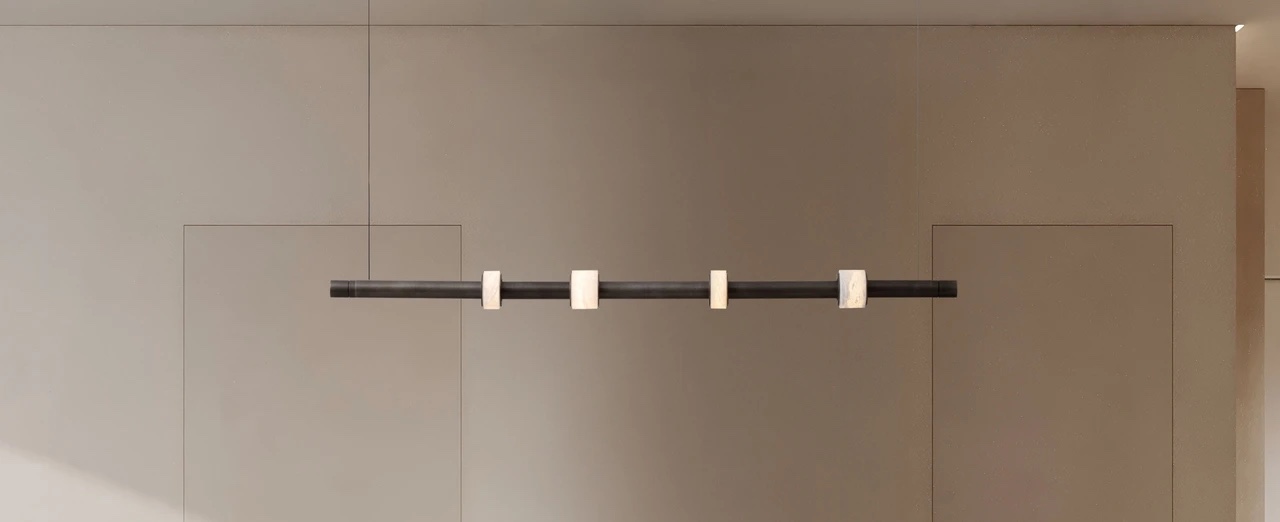
Consider the complete visible shape: a long, delicate line and a substantial fitting of the same length feel different. Make a paper template or mark the dimensions with masking tape. Leave visual breathing space around the edges of the top and check the arrangement from a seated position and the entrance.
3. Finding a comfortable hanging height
Measure from the tabletop to the lowest point of the light, not just the length of its cable. For an initial mock-up, you could try an 80 cm gap above the surface, then adjust it for the furniture, users and shade design. This is a trial starting point, not a mandatory installation standard.
Sit opposite another person: the light should not obscure their face or expose an uncomfortably bright source at eye level. At an island, also check standing sightlines and freedom of movement. A large shade, high ceiling or transparent diffuser may call for a different position.
Calculation example: a 270 cm ceiling, 75 cm table and chosen 80 cm gap leave 270 − 75 − 80 = 115 cm from the ceiling to the bottom of the fitting. This is the overall drop, including the body and ceiling canopy, not the required cable length. Compare it with the exact model’s minimum and maximum overall height.
4. Look beyond the lumen figure
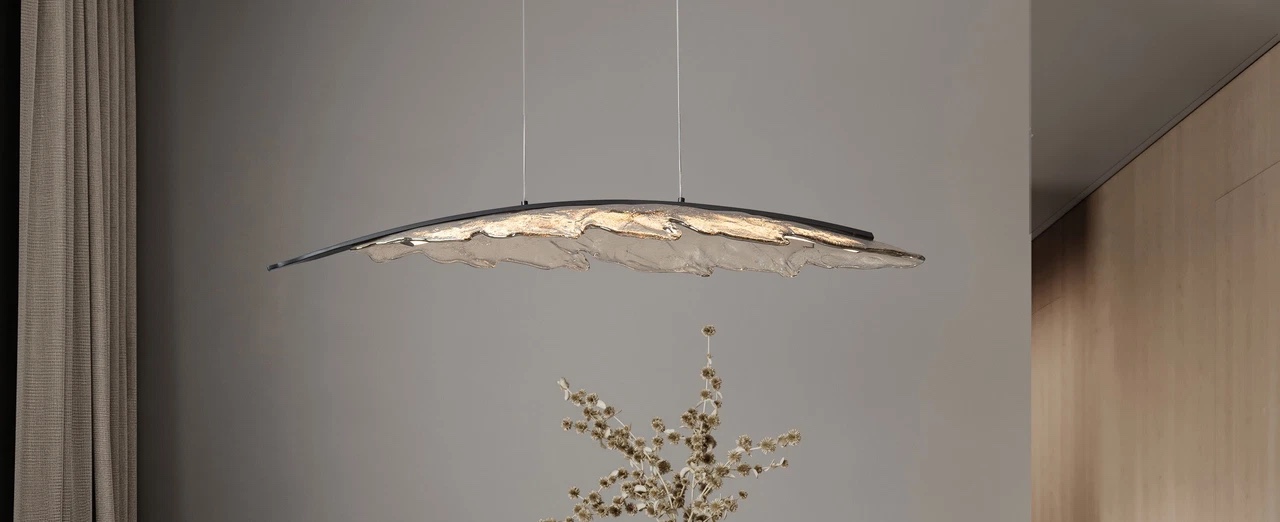
Over a table, it matters where the light goes. An opaque shade may concentrate illumination on the top, while a body that glows in all directions also lights the surroundings. Equal light output does not guarantee an equal result on the surface.
Check reflections on a glossy table, whether LEDs are visible from below and the light reaching the outer seats. For an island used for preparation, assess pendants alongside ambient and supplementary task lighting. Choose the number of fittings for their distribution, not symmetry alone.
In the pendant category, compare exact product codes: dimensions, light output, light source and available documents. Photographs can make the actual scale easy to underestimate.
5. Colour temperature and dimming
For a relaxed dining area, 2700K or 3000K can be a starting point. At an island, consider the rest of the kitchen lighting: an accidental mix of noticeably different tones can feel disjointed. Meanwhile, 4000K does not automatically mean brighter light — colour temperature and light output are separate choices.
If you want to change the atmosphere, check dimming support for the exact product code. LED on its own does not promise dimmability. Triac, DALI and other control methods need suitable components; do not choose a dimmer only to match the appearance of a switch. With replaceable lamps, check lamp and dimmer compatibility separately.
6. Installation and everyday practicality
Before ordering, confirm the number of connection points, canopy dimensions, weight and suitability for your ceiling. Discuss a sloping ceiling or an off-centre power point in advance. Not every model offers the same drop adjustment or can be fitted to a track.
Above an island, consider cleaning and the position of the cooker hood. Near a sink or hob, assess the fitting and its location against the installation instructions and actual room conditions. Have the final mounting and electrical connection carried out by a qualified professional.
7. Your pre-order checklist
Prepare a photograph and a few measurements to make the discussion specific. For a project order, a furniture plan and the locations of electrical outlets are useful too.
- The worktop dimensions, table height and ceiling height are known.
- The shape and number of pendants have been tested with a template, not just viewed in a photograph.
- The chosen height is comfortable seated and standing, without distracting glare.
- Light reaches the required areas rather than only the centre of the table.
- What is included, drop adjustment and control compatibility have been confirmed.
- Fixings, ceiling canopy and installation conditions have been checked.
Find a pendant for your space
Explore pendant lights at Luminance. Send the table or island dimensions and ceiling height so we can discuss suitable options and what the order should include.
Explore pendant lighting