




Choose a light by its lumen output, not by wattage alone. This guide gives you a simple starting point for calculating room lighting and shows where ambient light is enough and where dedicated task lighting is needed.
If you already know the room dimensions, you can browse the Luminance lighting catalogue. First, let us work out how much light the room actually needs.
1. Lumens and lux: what is the difference?
Lumens (lm) describe the total amount of light produced by a source. Lux (lx) describes how much light reaches a surface. One lux equals one lumen per square metre.
For a first estimate, use this formula:
Lumens = room area × target illuminance in lux
For example, a 20 m² living room at a target of 150 lx needs approximately 3,000 lm. In a real interior, adding a 20–30% allowance is sensible because shades, mounting height and dark surfaces absorb some of the light.
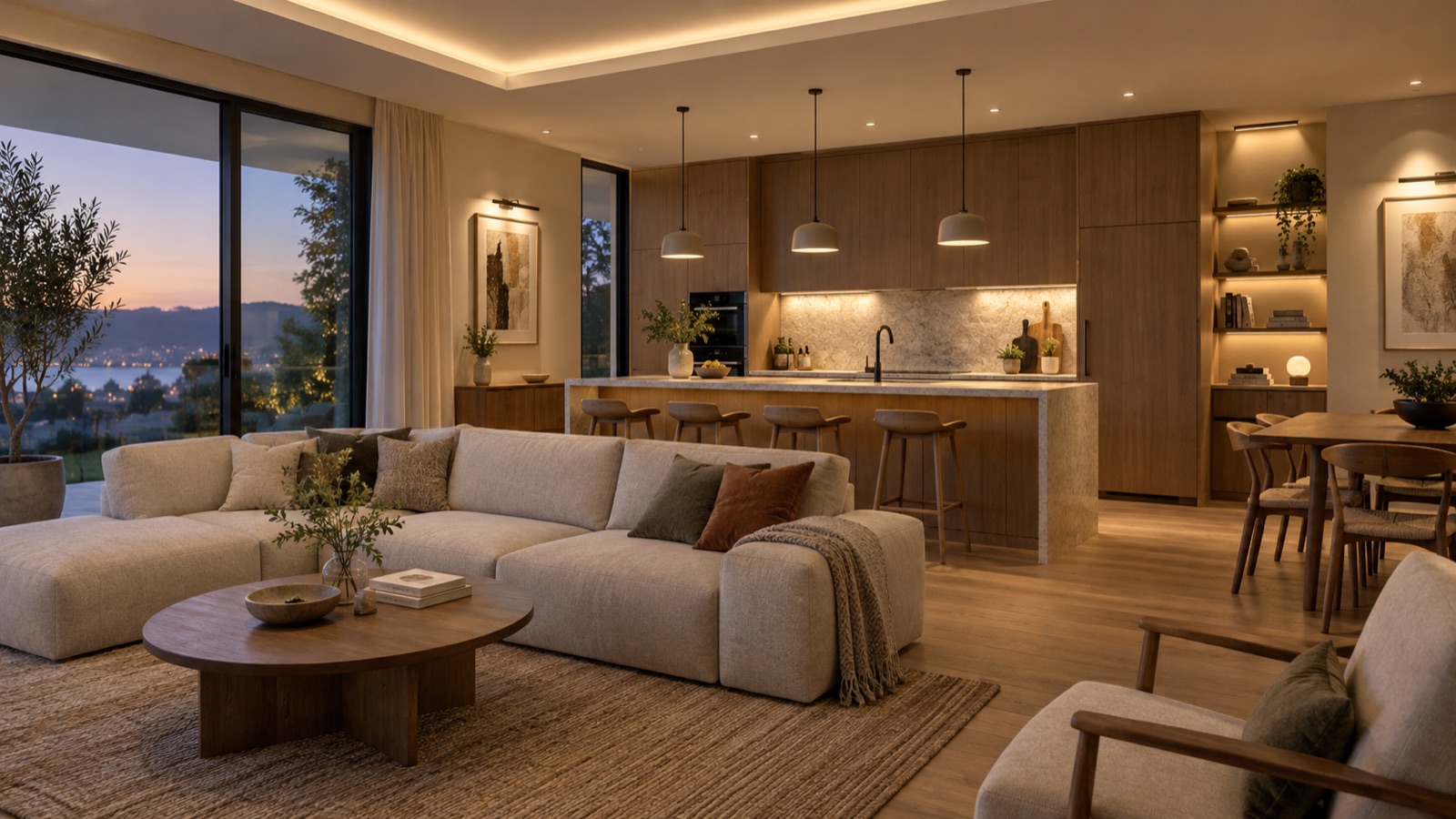
Good lighting is not one extremely bright lamp, but several well-planned layers of light.
2. Quick room-by-room guide
Living room
100–200 lx for ambient light
300–500 lx in a reading area
Bedroom
100–150 lx for ambient light
300–500 lx by a bed or wardrobe
Kitchen
200–300 lx for ambient light
400–500 lx on a worktop
Bathroom
200–300 lx for ambient light
300–500 lx at the mirror
These are practical starting points rather than rigid rules for every interior. The occupants' age, ceiling height, surface colours and beam angles can significantly affect the result.
3. How much light does each room need?
Living room: 100–200 lx
For a 20 m² living room, the ambient-light range is approximately 2,000–4,000 lm. A comfortable middle value is around 3,000 lm, plus a floor lamp, wall light or directed light for reading and accents.
Not every light has to be on at the same time. Dimming or separate circuits allow soft evening light and higher brightness for cleaning or working.
Bedroom: 100–150 lx
A 14 m² bedroom usually needs 1,400–2,100 lm of ambient light. Add focused bedside sources of around 400–600 lm for reading instead of making the entire room excessively bright.
Warm 2700–3000 K light helps create a calm atmosphere. A wardrobe can have its own LED strip or directed luminaires.
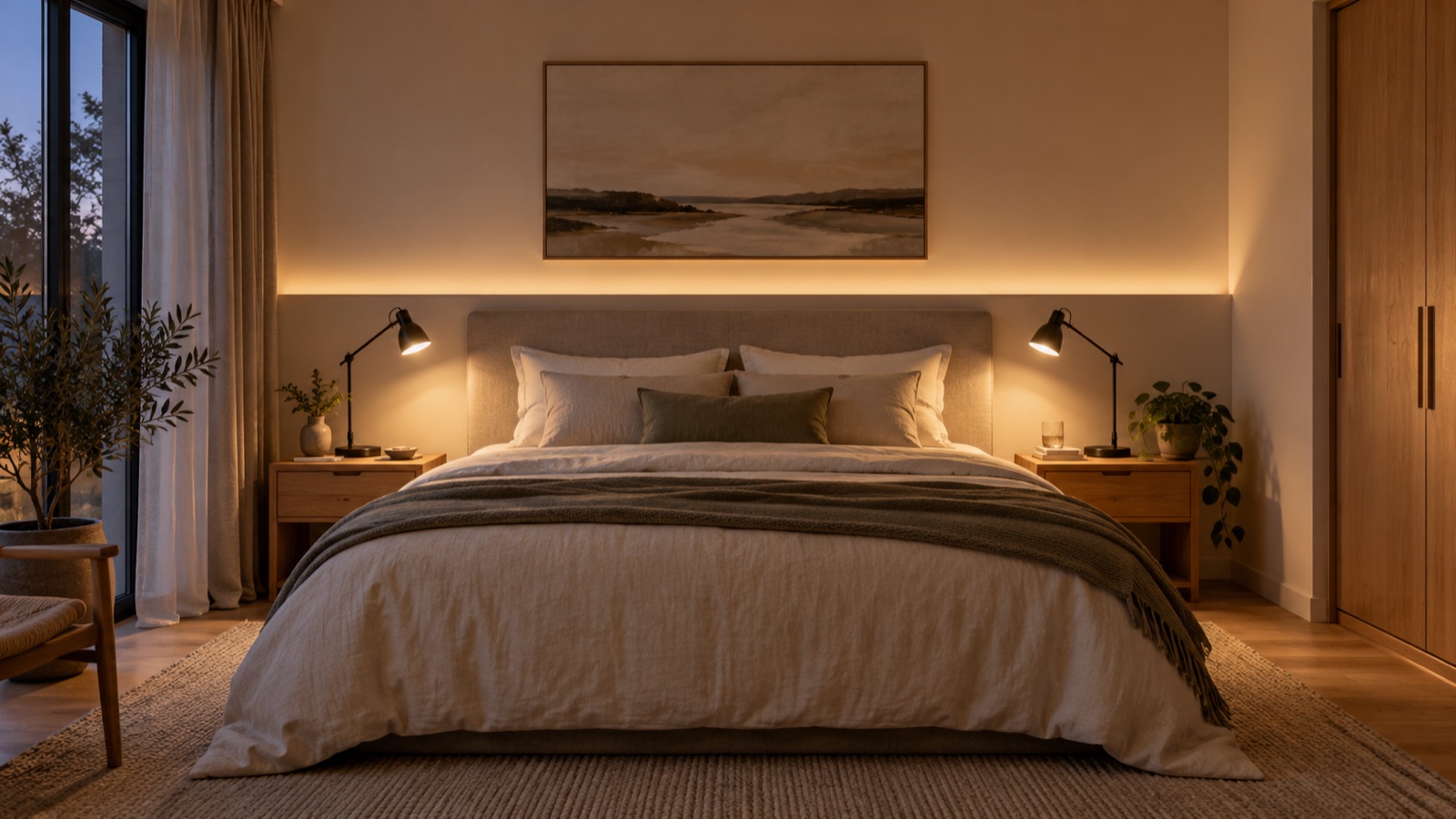
In a bedroom, separate calm ambient lighting from brighter reading light.
Kitchen: 200–300 lx, worktop 400–500 lx
For a 12 m² kitchen, the ambient-light range is approximately 2,400–3,600 lm. Ceiling light alone is not enough when a person standing at the counter blocks it. The worktop, sink and hob therefore need dedicated light.
For flexible aiming, consider track lighting systems. Under wall cabinets, a continuous LED strip in a profile gives even task light.
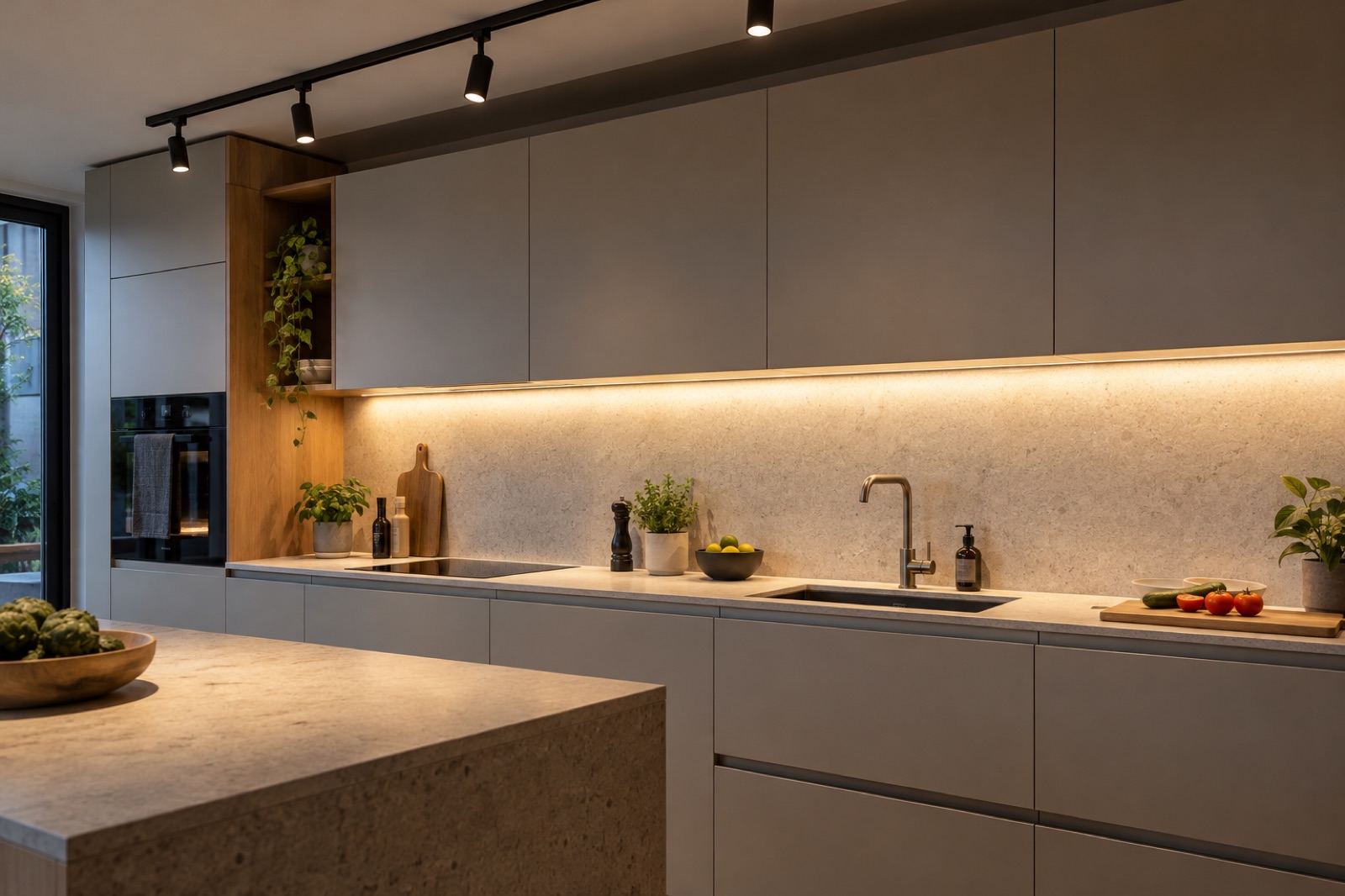
A worktop needs more light than the kitchen floor or circulation area.
Bathroom: 200–300 lx, mirror 300–500 lx
A 6 m² bathroom needs approximately 1,200–1,800 lm of ambient light. At the mirror, brightness is only part of the solution: light should fall evenly on the face without deep shadows or uncomfortable reflections.
Always consider the installation zone and IP rating. A luminaire installed near water must be suitable for the specific bathroom zone.
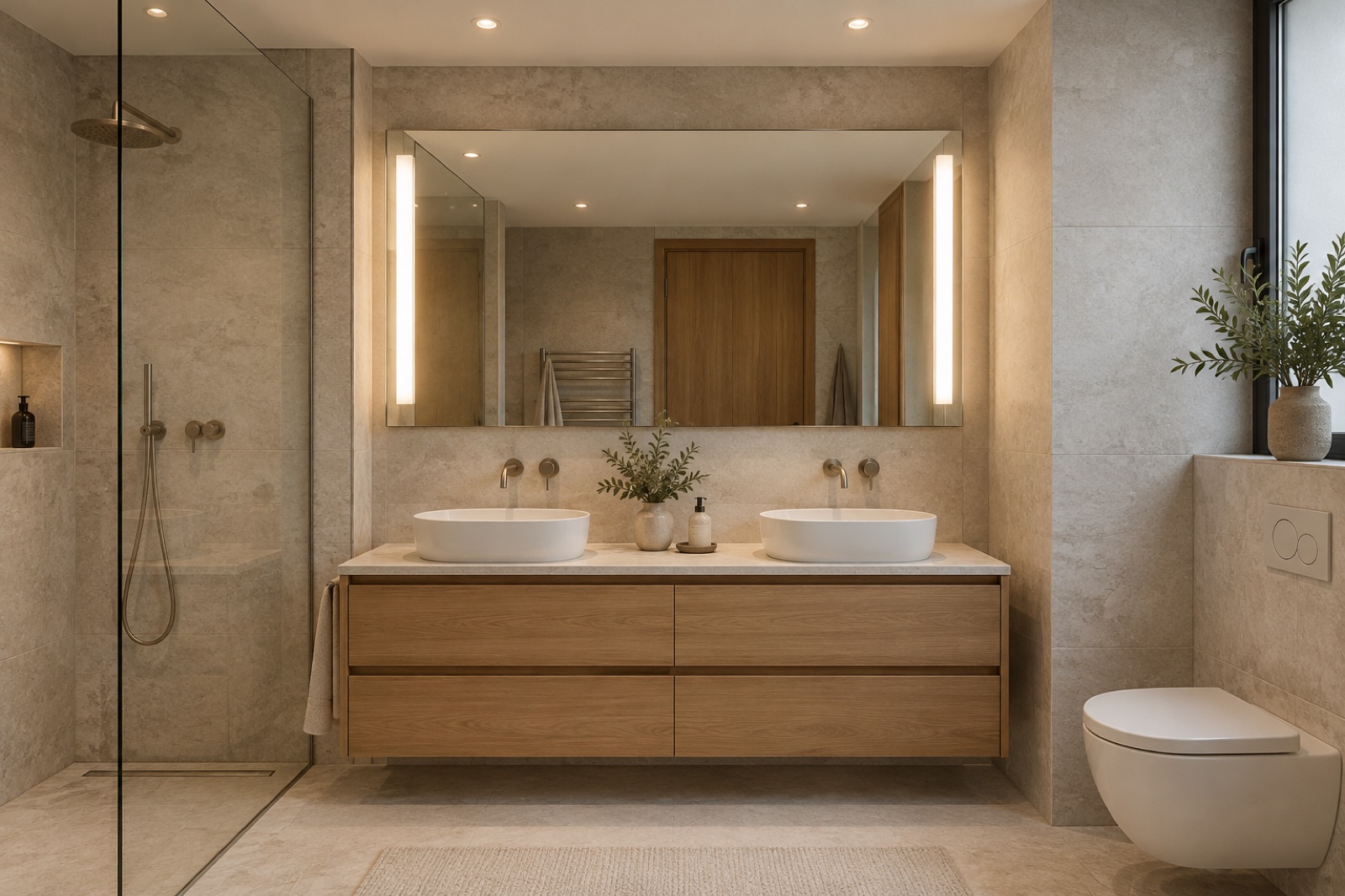
At the mirror, direction and uniformity matter as much as the lumen figure.
4. Why is an area-based calculation only a starting point?
- Dark walls and furniture absorb more light — add 20–30%.
- A high ceiling increases the distance to the working plane.
- A narrow beam creates a bright spot but not even room lighting.
- A frosted diffuser softens the light but reduces effective brightness.
- Several lighting scenes are more useful than one oversized central light.
5. Quick checklist before you buy
- Measure the room area.
- Choose target levels for ambient and task lighting.
- Multiply the area by the target lux and add a sensible allowance.
- Divide the total output between several luminaires.
- Check colour temperature, CRI, beam angle, dimming and IP rating.
Find the right light for your interior
The Luminance catalogue includes ceiling, wall, track and accent luminaires for different tasks. If you are unsure about the calculation, we can help you plan a balanced lighting scheme.
Browse the catalogue