


The entrance welcomes us every day. It is where we find keys, check the mirror and move safely into the home. A good lighting scheme supports those tasks while preserving a calm atmosphere.
Explore Luminance’s wall lights and LED profiles for initial ideas. Start with circulation and furniture positions before selecting fixtures.
1. Entrance: separate the tasks
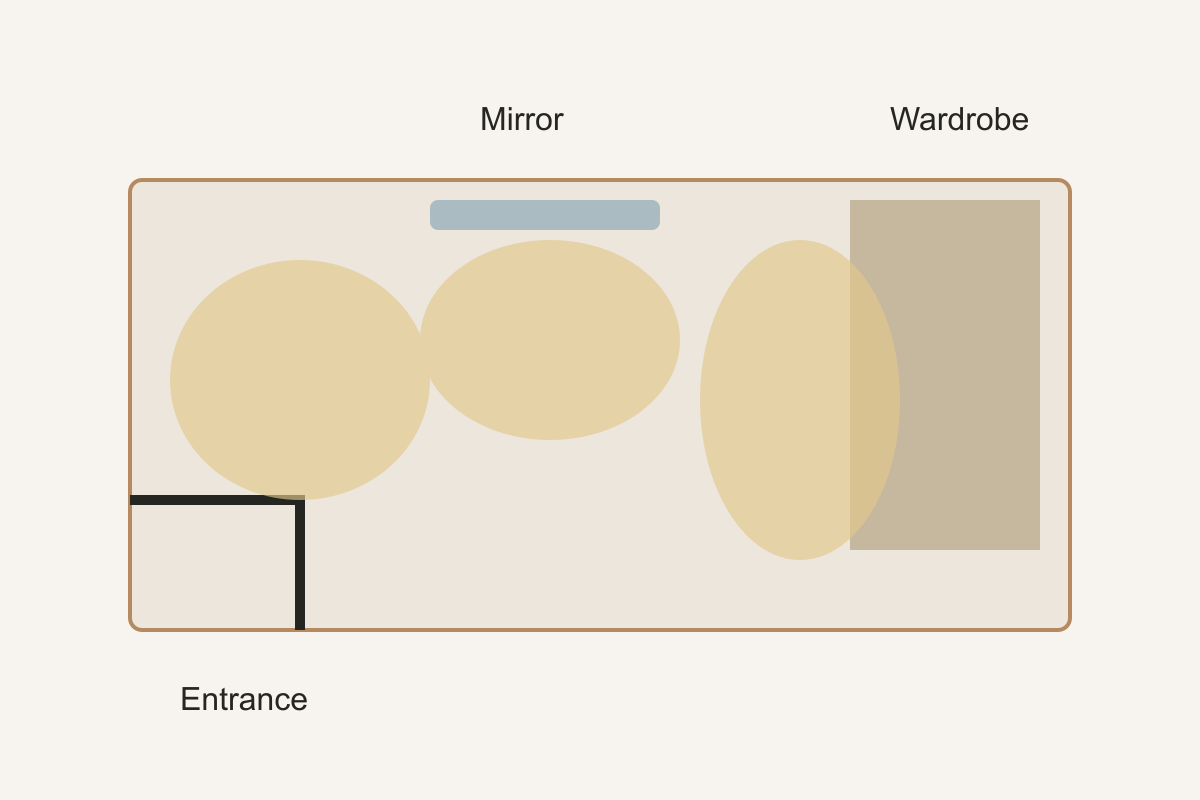
Mark the door, wardrobe, seat and mirror on your plan. General light helps orientation; local light helps you find belongings or check your appearance. A single source behind you may leave your face and the wardrobe interior in shadow.
Check the result with cupboard doors open and somebody standing at the mirror. Fixtures should not obstruct doors or appear as glaring points in the reflection. Make sure light can be switched on immediately upon entering.
2. Corridor: continuity before bright patches
Consider illumination of the floor, doors and walls together. Large dark gaps between bright pools make a long passage less comfortable. Fixture count depends on optics, ceiling height and finishes.
Compare wall lighting with ceiling lighting. Do not choose spacing only for symmetry on a drawing: check actual light distribution and views from adjoining rooms.
3. Stairs: make the step edges clear
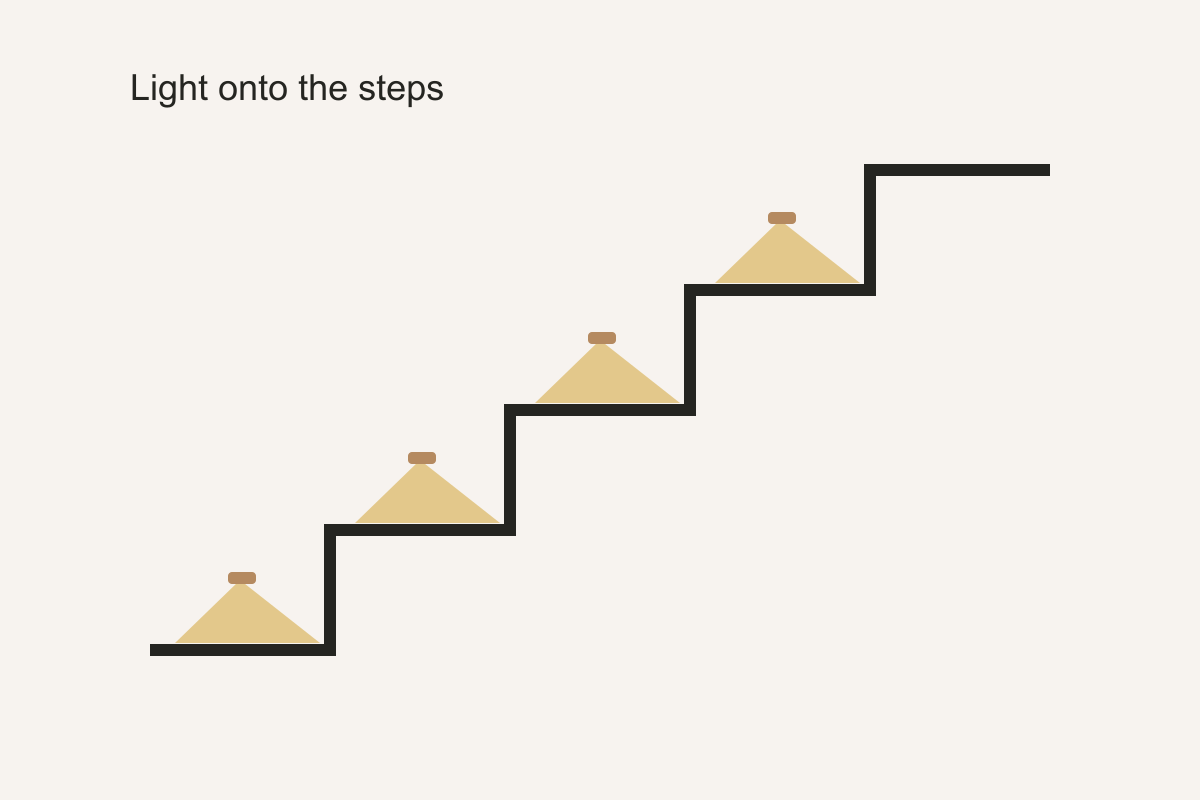
Light should help reveal tread edges, landings and changes of direction. Position sources so they do not shine directly into the eyes of somebody ascending or descending. Lighting each step is an option, not a universal requirement.
The illustration below explains a principle rather than an installation detail. Height and position must be checked on the actual staircase. Lighting does not replace sound handrails, clear circulation or other safety measures.
4. Night-time settings and control
A quieter level can be more comfortable at night than the light needed for cleaning or finding objects. Consider a separate circuit or compatible dimming. A motion sensor is useful when it detects entry to the route and its delay keeps the light on throughout the passage.
Keep an understandable manual control. On stairs, consider switching from different levels. Agree the arrangement with the electrician before finishing work, including power-supply positions and maintenance access.
5. Check before installation
When selecting an LED profile, consider diffusion, heat dissipation and a compatible power supply. The profile alone is not a complete lighting kit. Cables and connections should not lie where feet can catch them.
Walk through the space at a normal pace in the evening. Are steps visible? Are mirror reflections distracting? Is the switch easy to find? For public premises or escape routes, lighting and emergency-lighting requirements must be addressed separately in the project.
- Appropriate light at the entrance, mirror and wardrobe.
- Clear step edges and changes of direction.
- No direct glare or distracting reflections.
- Controls that everyone in the household understands.
Plan light along the whole route
Send us a plan of your entrance or staircase. We can help select lighting for its layout and tasks.
Explore wall lights